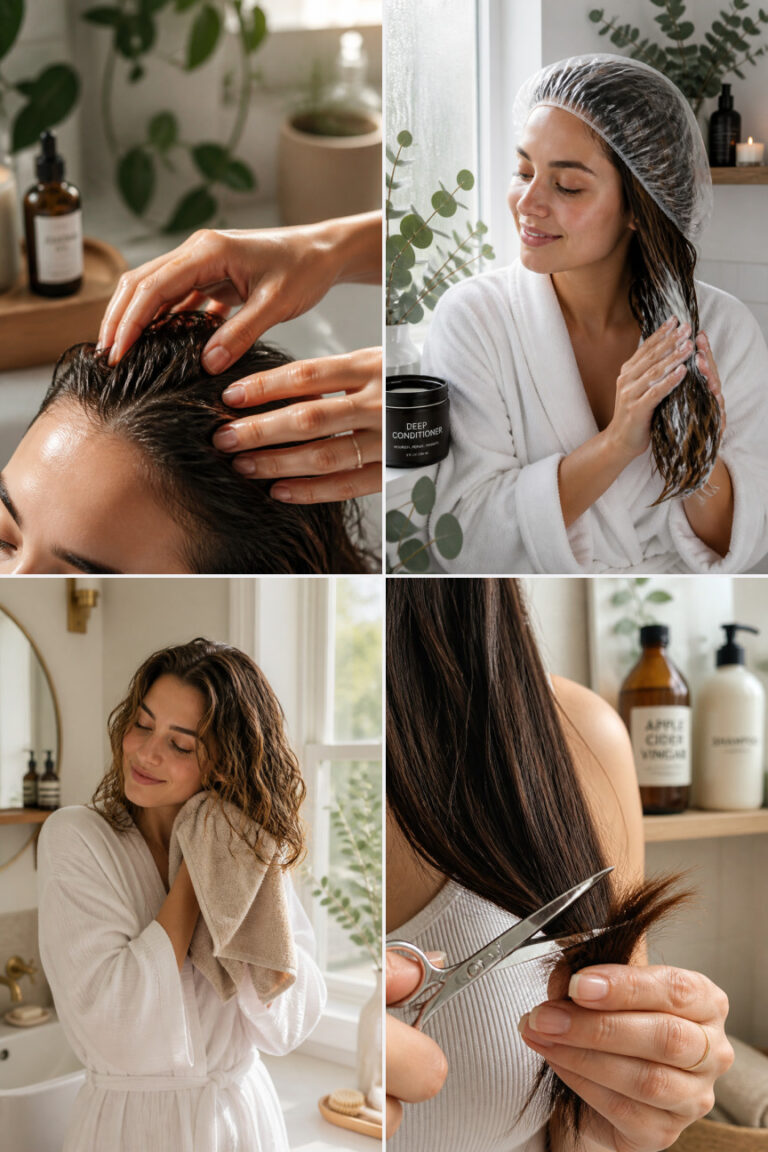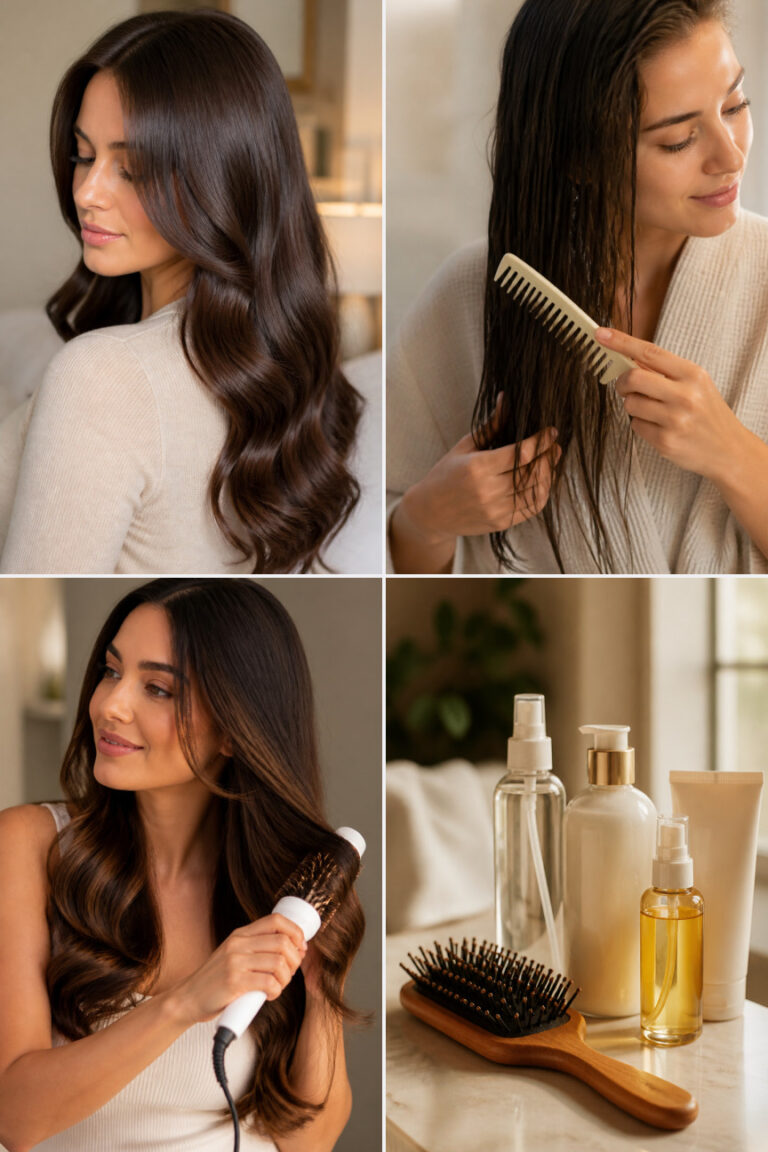

Your nighttime habits can help protect your hair from breakage, dryness, and unnecessary tangles. A simple routine supports your scalp, preserves moisture, and makes your hair easier to manage in the morning. Follow these gentle steps to give your strands thoughtful care while you sleep.
Start With a Gentle Evening Detangle
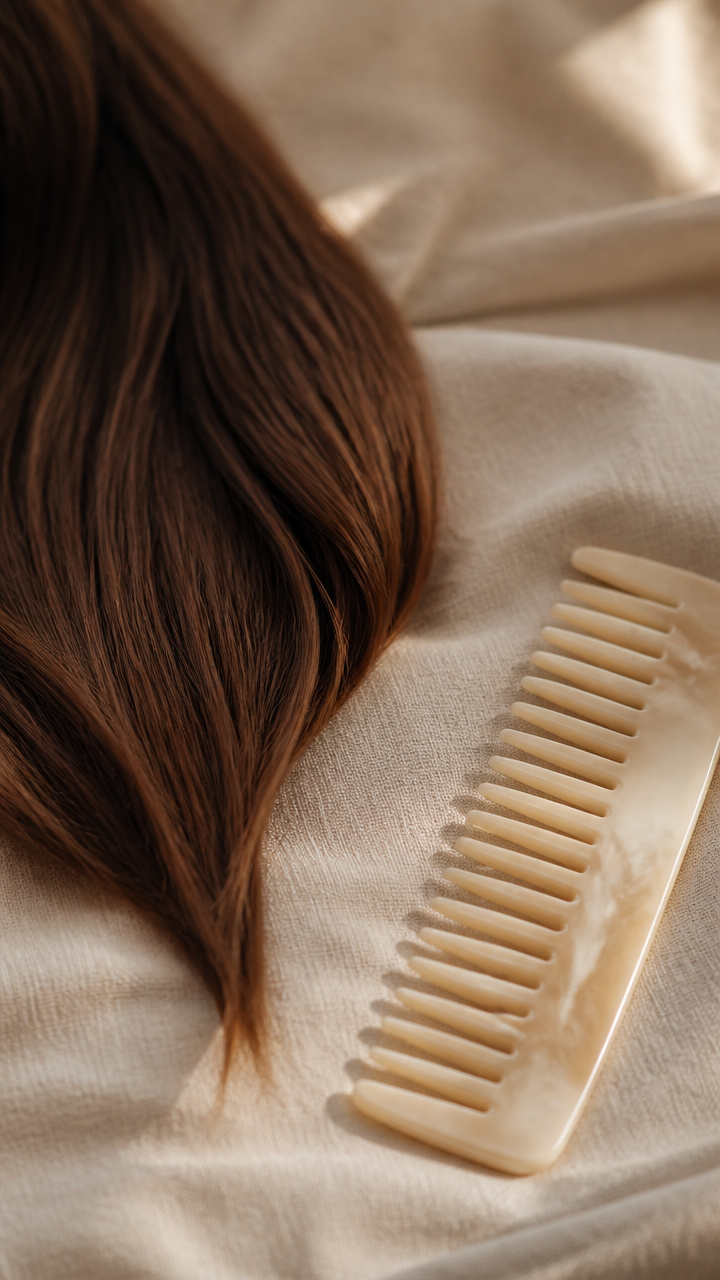
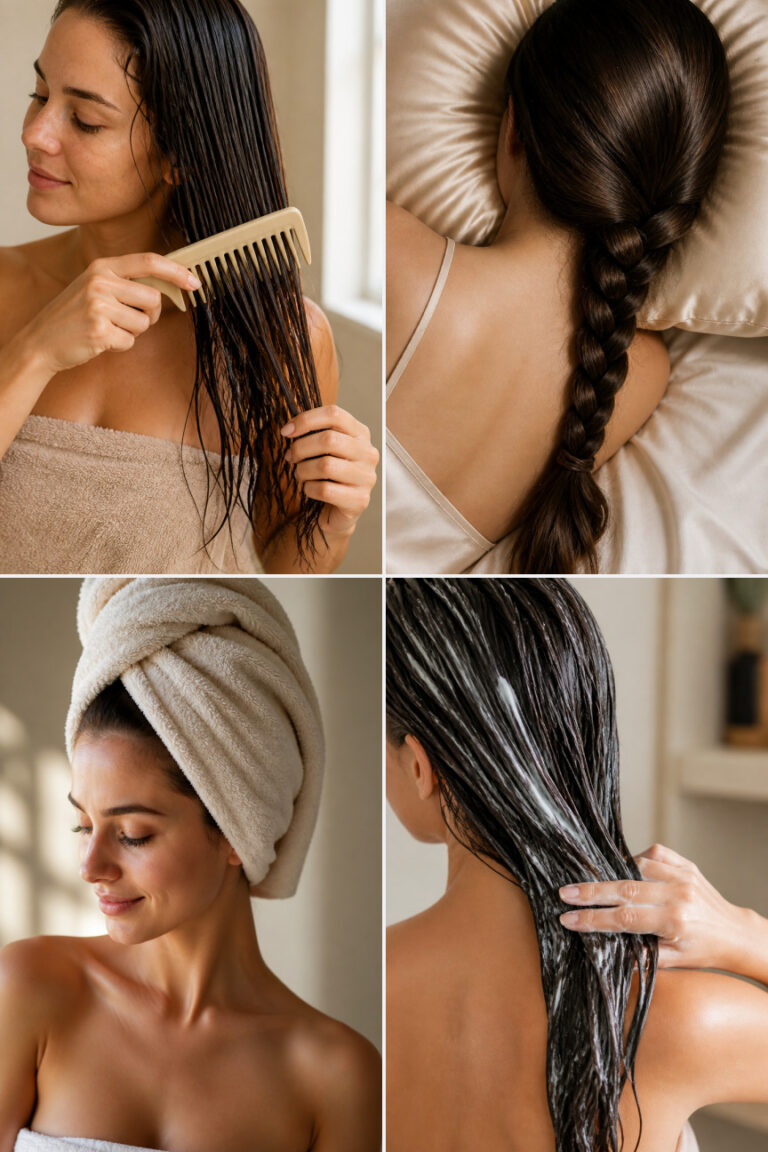
Use a wide-tooth comb or a soft-bristled brush to remove tangles before bed. Begin at the ends and work upward slowly, holding your hair near the roots to reduce pulling. If your hair feels fragile, divide it into sections and detangle with patience rather than force.
Let Hair Dry Before You Sleep
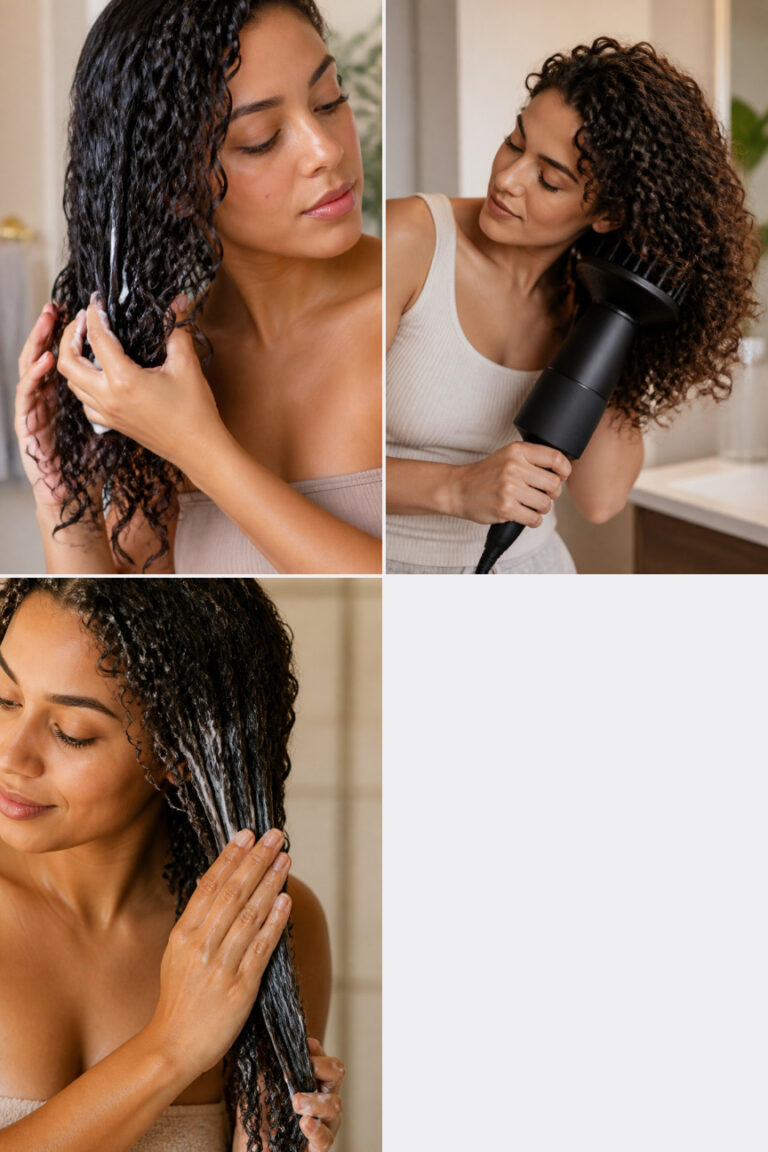
Whenever possible, allow your hair to dry fully before lying down. Wet strands stretch more easily and can break when they rub against a pillow. If you need to speed things up, use a blow dryer on a low or cool setting and keep it moving.
Add Moisture Where Hair Needs It

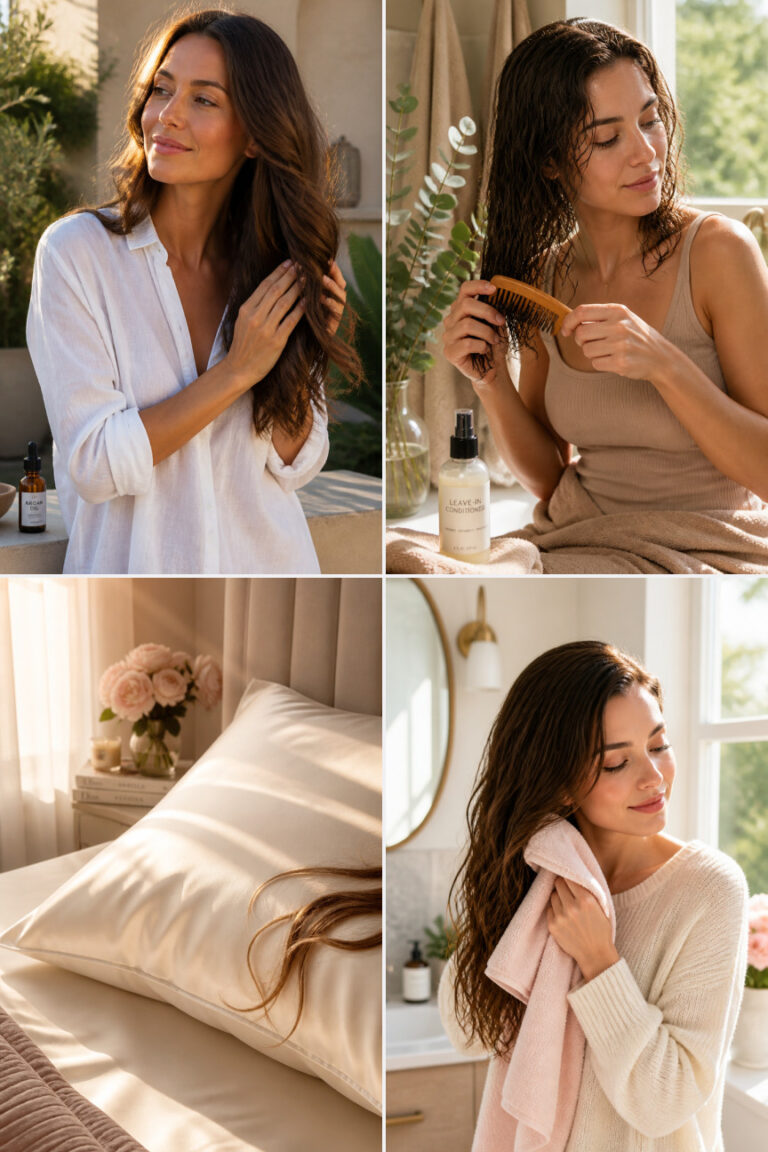
Apply a small amount of leave-in conditioner, lightweight hair oil, or serum to the mid-lengths and ends. Avoid applying heavy products directly to the scalp unless a professional has recommended them for your needs. Use less than you think you need, then add a little more only if your ends still feel dry.
Choose a Protective Sleep Style

Gather long hair into a loose braid, low ponytail, or soft twist before bed. Secure it with a fabric scrunchie that does not squeeze or snag the strands. Keep the style relaxed, because tight tension can stress the roots and contribute to breakage.
Reduce Friction With the Right Pillowcase

A satin or silk pillowcase creates a smoother surface that helps limit friction, frizz, and tangling. If you prefer a cotton pillowcase, protect your hair with a satin bonnet or scarf instead. Choose an option that feels comfortable enough to use consistently.
Care for Your Scalp Without Overdoing It
Take a moment to check how your scalp feels before adding products. A gentle fingertip massage can feel soothing and distribute natural oils, but avoid scratching or using your nails. If you notice persistent itching, flaking, soreness, or unusual shedding, ask a dermatologist for guidance.



Keep Your Routine Simple and Consistent
You do not need a long list of products to support healthier-looking hair. Detangle gently, protect your strands, manage moisture, and avoid tight styles that create tension. Adjust the routine according to your hair texture, scalp needs, and how your hair responds.
A thoughtful night routine can make your hair feel softer, smoother, and easier to style without adding much time to your evening. Focus on gentle handling and consistent protection, then give your hair time to show the benefits.