

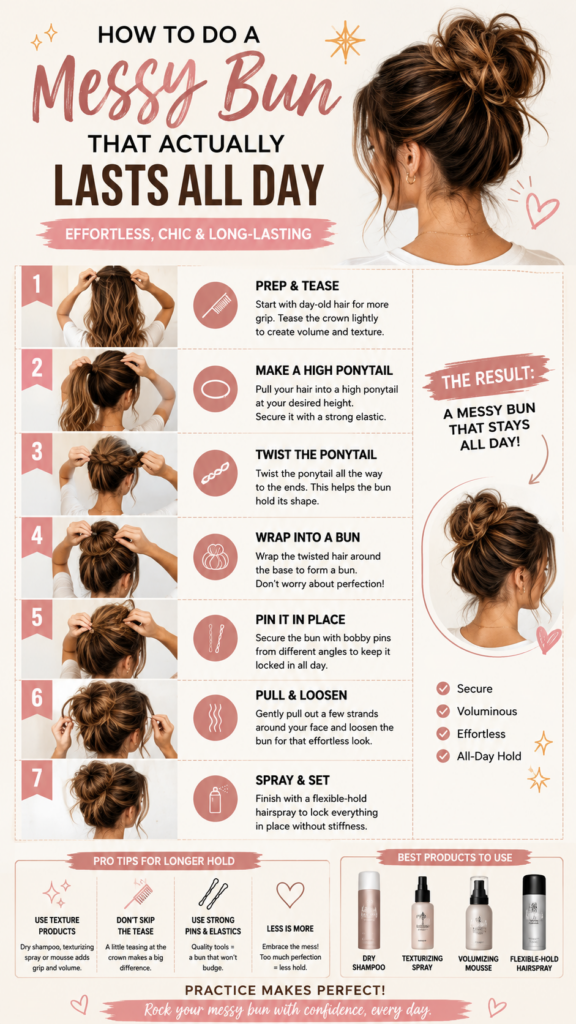
I used to think I was just bad at doing my own hair. Every messy bun I made looked great for the first hour, then slowly turned into a lopsided knot with pieces falling out everywhere by mid afternoon. Turns out the problem wasn’t my hands, it was the order I was doing things in, and a few small habits I wasn’t using at all.
A bun that survives a full day, gym to desk to dinner, comes down to prep, not luck. Once I changed a few steps, the same style that used to fall apart by lunch now holds until I take it down myself at night. Here’s what actually made the difference.
Skip the Freshly Washed Hair
This one surprised me the most. Clean, silky hair feels nice, but it’s terrible for a bun. It has nothing to grip onto, so the twist just slides loose within the hour.
Second or third day hair works far better because your natural oils give each strand something to hold onto. If you’ve just washed your hair and don’t want to wait, a bit of dry shampoo at the roots does the same job. It’s a small step, but it’s probably the single biggest reason buns fall apart early.
Add Grip Before You Tie Anything Back
I used to skip this step entirely and just go straight for the hair tie. Big mistake. Working a small amount of texturizing paste or salt spray through your hair before you gather it gives the twist something to hold on to later. Fine or slippery hair especially needs this. Thick or coarse hair can usually skip it and go straight for a stronger hold spray at the end instead.
Section It Before You Tie It
Don’t just grab everything in one motion and hope for the best. Clip your front pieces away from the back first, especially if you have shorter layers or bangs. Tie the back section into your ponytail at the height you want, then bring the front pieces in last. This alone stops a lot of the early slipping that makes a bun look undone in the wrong way by noon.

Tease the Base, Even Just a Little
I resisted this for years because teasing felt like a step from a different decade. But a light backcomb near the base of your ponytail, before you twist it, gives the bun actual structure instead of letting it flop over on itself. You don’t need much, a few gentle strokes near the crown is enough to lift it and add shape.
Try Splitting the Ponytail in Two
If your bun keeps sliding down the back of your head by afternoon, this trick fixes it. Instead of one ponytail, tie two, one stacked just above the other. Twist each separately, then wrap them around each other at the base before pinning. Splitting the weight this way keeps the bun balanced instead of letting one heavy twist drag itself loose, which matters a lot if you have long or thick hair.
Building the Bun Itself
Once your hair is teased and ready to go:
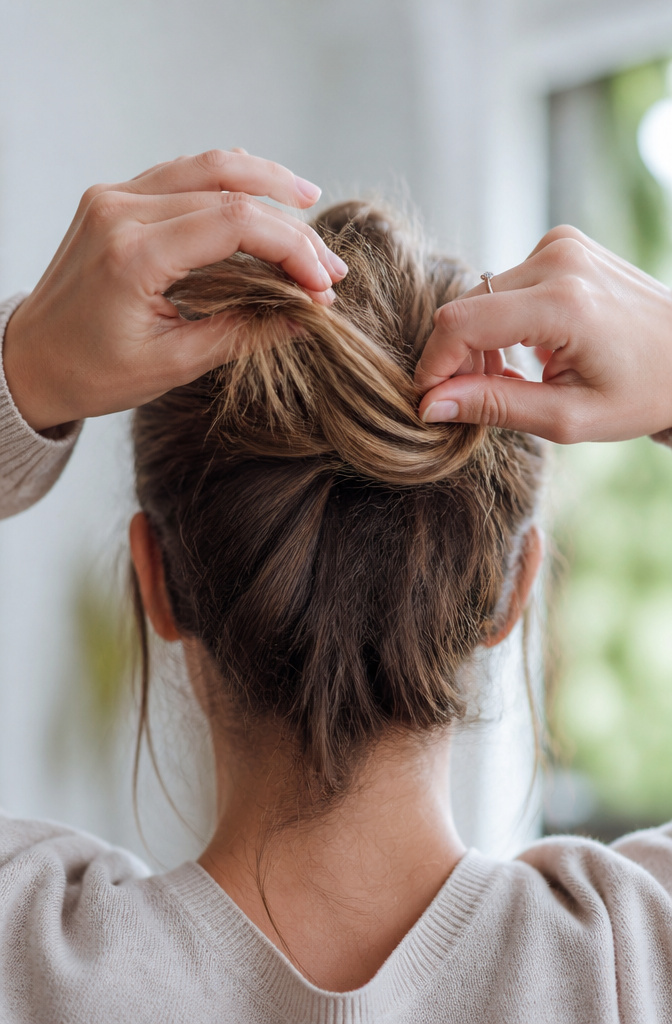
- Twist the ponytail loosely. It should feel relaxed, not like a tightly wound rope.
- Wrap the twist around the base of the ponytail.
- Tuck the tail end underneath instead of leaving it sticking out.
- Pin it with bobby pins at different angles, crossing a few of them in an X shape rather than lining them all up the same direction.
Loose really is the key word here. A bun wound too tight fights against its own pins all day and tends to come undone faster, not slower.
Set It With the Right Spray
Once the bun is built, mist it lightly with a flexible hold hairspray from a few inches away, close enough to hold, far enough that it doesn’t go crunchy. Thicker hair can handle a stronger hold formula. Fine hair usually looks better with something lighter so the bun doesn’t sit stiff.
Pull a couple of face-framing pieces loose after spraying, not before. This is the difference between a bun that looks intentionally undone and one that just looks like it’s falling apart.
What Works Best for Your Hair Type
A few adjustments depending on what you’re working with:
If your hair is fine or slippery, skip heavy products and lean on teasing instead. Small, thin bobby pins hold better than thick ones, which tend to just slide out.
If your hair is thick or coarse, you probably don’t need extra texture spray at all. Focus on splitting the ponytail in two to manage the weight, and finish with a strong hold spray so it doesn’t sag by mid afternoon.
If your hair is curly or textured, let your natural texture do most of the work. Twist gently rather than tightly so you don’t pull the curl pattern out of shape, and a curl-friendly gel at the roots usually works better than a dry spray, which can leave curls feeling parched.
If your hair is short or shoulder length, use more pins than feels necessary and keep the bun on the smaller side. A tighter, smaller bun holds far better on shorter hair than trying to stretch it into something bigger than it wants to be.
If mornings are always rushed, braid your hair loosely before bed. You’ll wake up with texture already built in, which cuts your styling time down to a couple of minutes and gives the bun a head start on holding its shape.
Keep a Small Kit for Touch-Ups
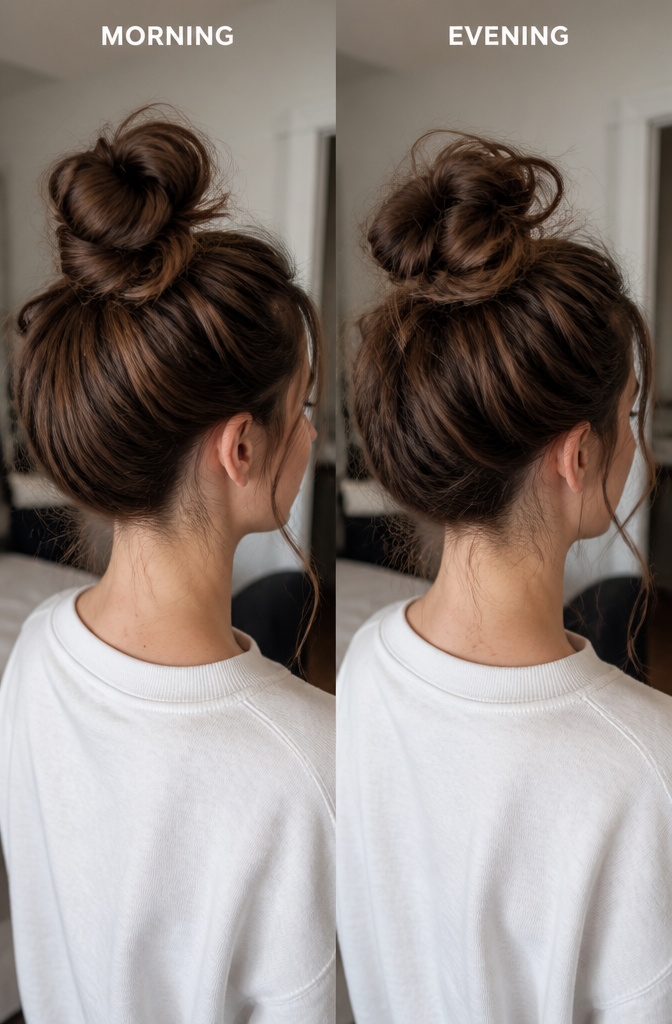
Even a well-built bun can use a little help by evening. I keep two bobby pins and a mini texturizing spray in my bag, that’s it. If pieces slip loose later in the day, you don’t need to redo the whole thing, just tuck them back in or let them sit loose on purpose. A bun that softens a little by evening isn’t a failure, that’s just what the style is supposed to do.
Why Buns Usually Fall Apart Early
Most of the time it comes down to one of these: hair that’s too clean and slippery, a ponytail tied too tight, only one or two pins holding the whole thing, no product used at all, or all the hair twisted into one heavy section instead of split across two.
The Combination I Always Come Back To
If you want one method to just stick with, this is mine: second or third day hair, or dry shampoo if it’s freshly washed, a light texturizing spray worked through before tying back, a gentle backcomb at the crown, the two-ponytail twist and wrap, pins crossed at a few angles, and a flexible hold spray to finish. It takes maybe two extra minutes over throwing your hair up without thinking. That’s the difference between redoing it at 1 pm and forgetting about it until you take it down at night.